
3 Ways Kids Can Survive the Unexpected
When the wind picks up and the sky darkens, most of us rush for cover.
But for students in Outdoor Adventures’ (OA) Survival Skills Unit, those moments aren’t something to fear — they’re opportunities to think, adapt, and grow.
Across the country, more young people are heading outdoors than ever before, but most still experience nature in structured, guided settings. Few get the chance to learn what to do when the unexpected happens — when the weather shifts, the trail disappears, or plans go sideways.
That’s where OA’s Survival Skills Unit steps in. It helps students build confidence, curiosity, and calm under pressure — skills that last a lifetime.
Here are three ways OA helps students survive the unexpected — and thrive for life.

1. Learn to Think, Not Panic
The first survival tool isn’t a rope or a compass — it’s the mind.
Students begin by exploring how the brain reacts under stress and how to stay calm when fear takes over. Through scenario-based lessons, they practice keeping a Positive Mental Attitude (PMA) — learning that focus and optimism are just as important as any piece of gear.
This isn’t just about toughness; it’s about training the brain to make smart decisions under pressure.
When students face a challenge — like finding water or building a shelter before nightfall — they practice pausing, observing, and thinking strategically. Each step mirrors the same problem-solving process used in STEM fields: analyze, test, adjust, and improve.
These lessons build more than survival skills. They teach emotional control, critical thinking, and confidence — the kind of mindset that helps students navigate everything from outdoor challenges to classroom projects and life decisions.
“Stay calm, stay positive, and think your way through.” It’s not just a survival mantra — it’s a mindset for life.
2. Learn to Work With Nature, Not Against It
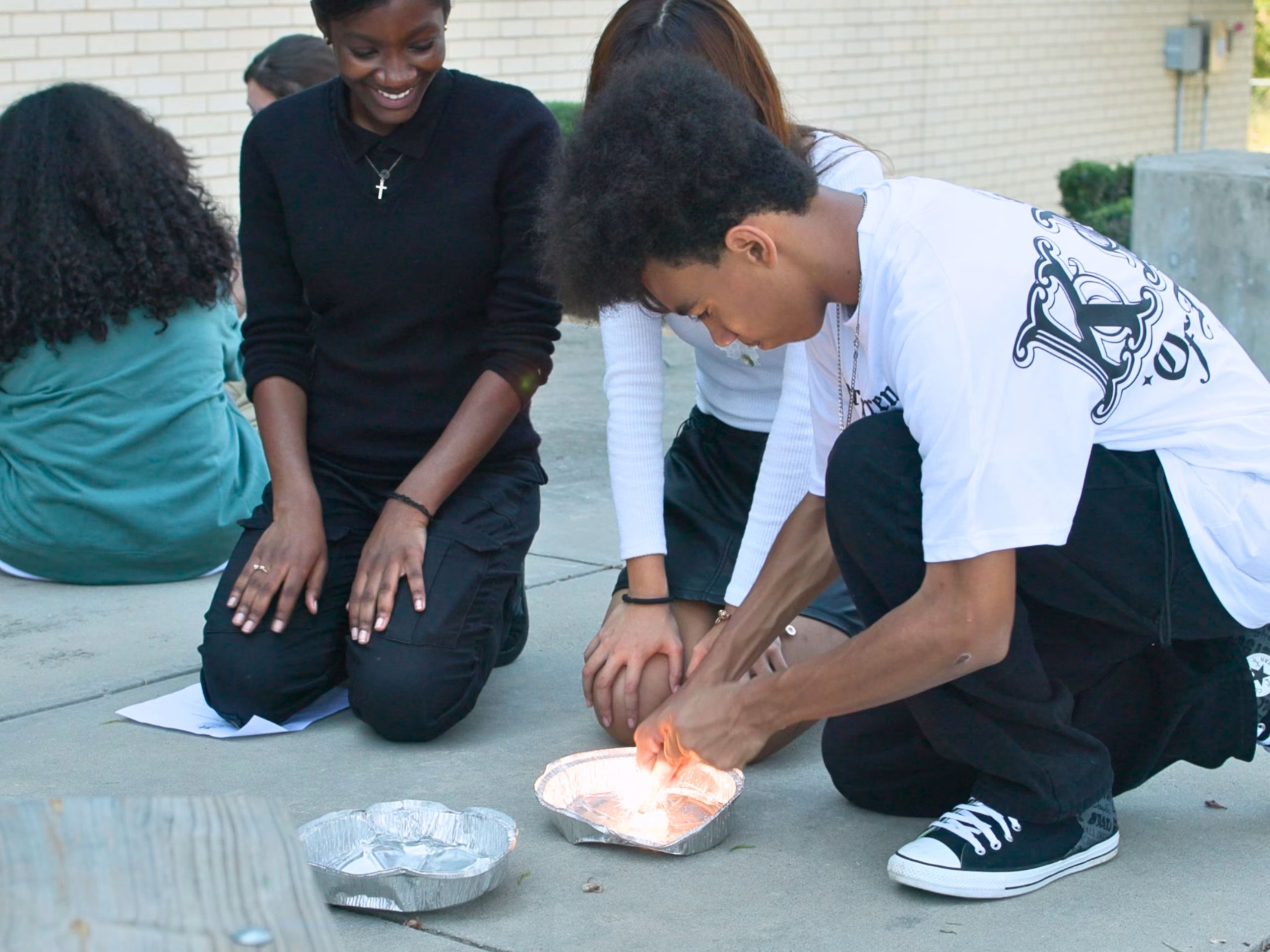
When students build their first tarp shelter or coax a fire to life after a rainstorm, they’re not just surviving — they’re understanding systems at work.
Each hands-on lesson connects directly to science, math, and environmental awareness. Students study how wind, heat, and fuel interact when starting a fire. They calculate rope lengths, shelter angles, and material strength. They analyze terrain, water flow, and weather patterns to choose the safest location for camp.
These activities make STEM come alive. Instead of reading about physics or chemistry, students experience them — feeling the effects of friction, measuring real-world outcomes, and seeing cause and effect in motion.
At the same time, they gain a deep respect for nature. By learning to observe, adapt, and use resources responsibly, they discover how survival depends on understanding and caring for the environment. Many students leave inspired to pursue fields like biology, outdoor education, or environmental science — careers built on curiosity, care, and problem-solving.
3. Learn How True Leadership Starts With Teamwork
No one makes it through a survival challenge alone.
OA’s Survival Skills Unit emphasizes communication, collaboration, and leadership under pressure. Students work together to plan, make decisions, and adapt when things don’t go as expected. They discover that the best leaders aren’t the loudest voices, but the ones who stay calm, listen well, and keep the group focused.
Each activity — from setting up camp to signaling for rescue — teaches cooperation and shared responsibility. Students learn how to divide tasks, trust teammates, and lead with empathy.
And when something doesn’t go as planned, they practice resilience — regrouping, problem-solving, and moving forward together. These are the same skills that translate directly into success in school, careers, and community life: thinking clearly, communicating effectively, and leading with confidence.
Lessons That Last a Lifetime
By the end of the Survival Skills Unit, students have mastered much more than knots and fire building. They’ve learned how to adapt, think critically, and lead with confidence — no matter what comes their way.
They walk away with real-world STEM experience, a stronger sense of teamwork, and the resilience to handle life’s unexpected challenges.
Because in the end, Outdoor Adventures doesn’t just teach students how to survive the outdoors.
It teaches them how to survive the unexpected — and thrive with confidence, curiosity, and purpose.